Onboarding Checklist
Want to watch a 20 minute video overview to get up and running? We've got you covered! Or if you'd rather, read on below and we will step you through some of the basics you'll want to cover with new users.
In this article
Learn the basics of conversations
Conversations are the communications you have with your customers in Help Scout, you might be used to calling them tickets or just emails if you've worked with other tools. Every conversation is a thread of replies and notes between you, your teammates, and the person you're replying to.
Replies are the messages your customer sees in their email.
Notes are internal memos visible only to your team (the editor turns yellow so you can tell at a glance) and are perfect for asking a teammate a question or leaving context for whoever picks up the conversation next, without having to leave Help Scout.
- Reply and Add Notes to Conversations
- Create a New Conversation
- Understand Conversation Icons and Colors
- Keyboard Navigation
Tip: Keep Help Scout open in a browser tab!
Pin Help Scout in a browser tab so you can pop in throughout the day to check assigned conversations, respond to @mentions, and keep an eye on the inbox.
How Help Scout is organized
Help Scout sorts conversations into folders so nothing gets lost. By default, you'll see folders like Unassigned (conversations waiting for someone to pick them up), Mine (anything assigned to you), Assigned (conversations assigned to other teammates), Closed, and Spam.
Conversations move between folders automatically as you and your team take action — assign one to yourself and it moves to Mine, close it and it heads to Closed.
If you would like to create your own folders, you can do that with Views. They allow you to sort and display conversations according to the criteria that you set, like an easy inbox filter.
And if you can't find a conversation by scrolling, Help Scout's search will dig through every email, note, and customer profile in your account.
Optimize your work
As you go, you'll start to run into three features that make the job a whole lot easier: Tags for labeling and organizing conversations, Saved Replies for the questions you answer over and over, and Workflows for automating the repetitive stuff. Here's a quick look at each:
Tags are labels you add to conversations to categorize, prioritize, or flag certain emails. They're searchable, they power reports, and they can trigger workflows. Click the Add tag icon inside any conversation to apply or create one.
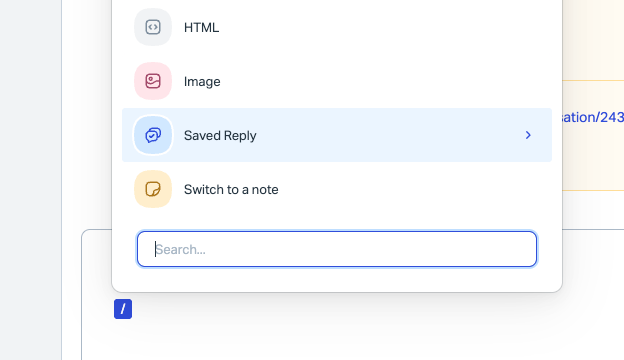
Saved replies are snippets of text you can quickly add into a reply for the questions you answer over and over.
Workflows are automations that can be set up, consisting of conditions (what to look for) and actions (what to do). Automatic workflows run in the background, they are great for tagging or routing new emails. Manual workflows run on your command via the lightning bolt icon on any individual email, which are useful for multi-step actions you do often, but ned to manually check first.
Collaborate with your teammates
Help Scout is built for teams sharing one inbox, so you'll never need to CC or BCC a coworker to loop them in. Instead, use @mentions in a note to get a specific teammate's attention. They'll get a notification and can jump straight into the conversation.
Assign a conversation to hand it off, or move it to a different inbox if it belongs with another team entirely.
Collision detection quietly warns you when a teammate is already viewing or replying to the same conversation, so two people don't accidentally send duplicate responses to the same customer. You never have to worry that you are working on the same email at the same time as one of your teammates.